
Explore JDM4U

NISSAN / SERENA / FOURTH GENERATION

Nissan SerenaC26

A family cabin with room to adapt. Explore the C26, then match its body, seats and powertrain to the Japanese version you actually want.

Japanese model reference · no stock implied
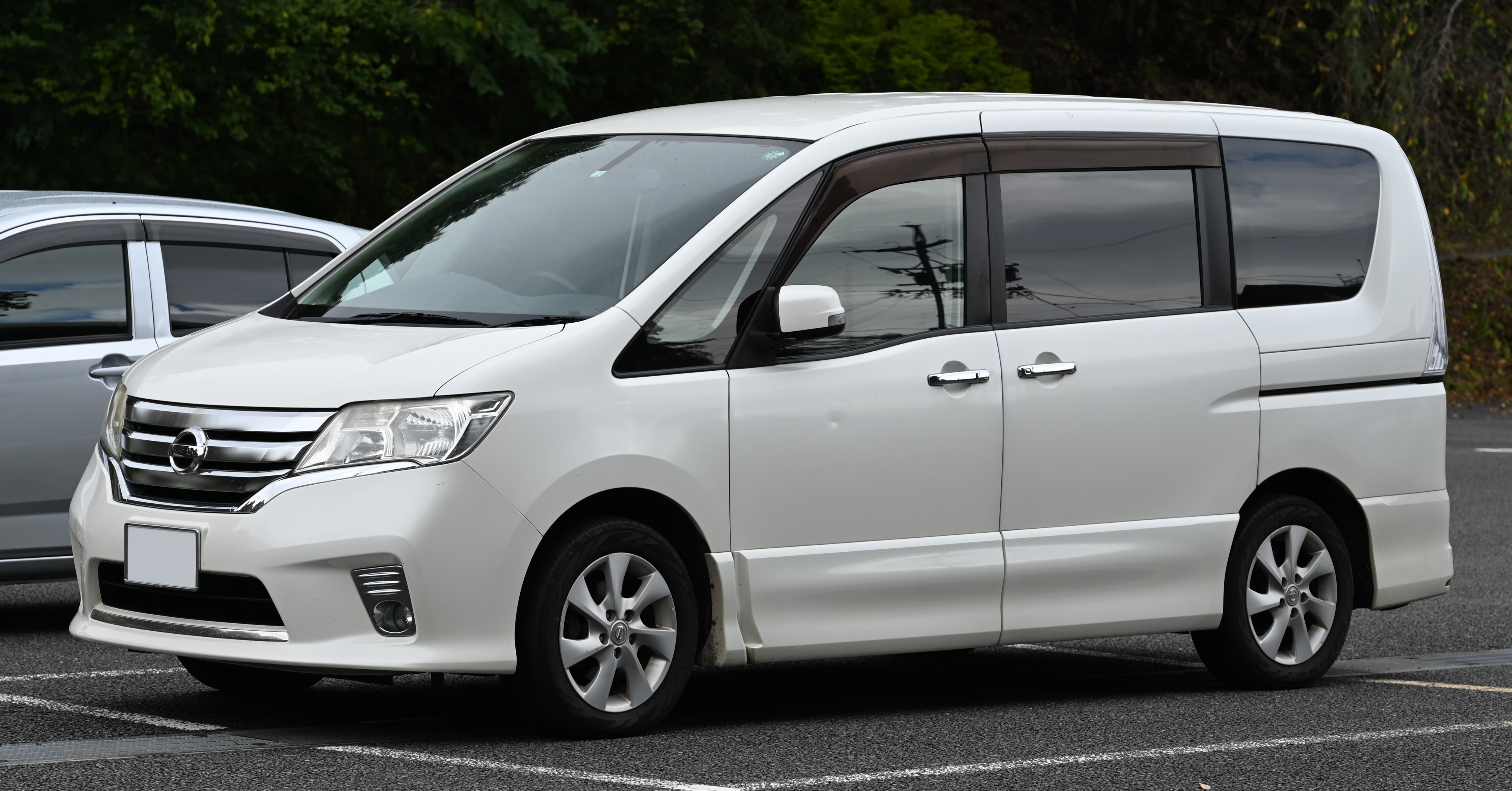
White pre-facelift Nissan Serena C26 Highway STAR photographed from the front three-quarter angle.
Pre-facelift Nissan Serena C26 Highway STAR. Appearance alone does not establish the initial petrol Idling Stop or later S-HYBRID specification, 2WD or 4WD, seating layout or fitted options. Reference photograph only, not a vehicle offered for sale. Photograph: TTTNIS · Wikimedia Commons · CC0 1.0. Image metadata removed; photograph otherwise unchanged.

Start with
the right car.

Nissan announced the all-new Serena on 8 November 2010 for Japanese sales from 29 November. Its launch focused on flexible seating, a roomy cabin and an idling-stop system. Nissan later introduced the Serena S-HYBRID in August 2012. Those events describe different points in the C26 era; ‘hybrid’ in a listing needs exact system and build-date evidence.

View the manufacturer release ↗

01

Date the electrification

Nissan's 2010 Idling Stop and later 2012 S-HYBRID are not the same as its subsequent e-POWER system. Ask for the exact powertrain name and Japanese model code.

02

Use the seat movement

The model was developed around flexible seating. Photographs can hide a damaged rail or missing component, so operate every seat, belt and sliding door before accepting the layout.

03

Compare the right Serena

The 2016 fifth-generation C27 brought different body and technology choices. Do not borrow ProPILOT, split tailgate or e-POWER claims from a later advert.

Know what
the source says.

These facts describe a dated Japanese release. A later update, a different grade or an individual imported car can differ.

Japanese salesFrom 29 November 2010
Launch seating briefThree rows · eight-passenger class
Original featureIdling Stop with ECO motor
2012 updateS-HYBRID from August 2012
TransmissionXtronic CVT in launch release
Guide scope2010-generation Serena

Check the build date, Japanese grade, chassis/type code and fitted equipment. No engine, seating, drive or feature should be copied into a vehicle advert without matching evidence.

DATED MANUFACTURER SPECIFICATION / CHECKED 20 OCTOBER 2026

The original Highway STAR.
Eight seats. Clear details.

Nissan’s November 2010 launch press information identifies this Highway STAR as a 2.0-litre petrol, front-wheel-drive, eight-seat model with Xtronic CVT. This table describes the initial C26 configuration, separately from the later S-HYBRID update.

Japan · November 2010 launch press information · Highway STAR · petrol · 2WD · eight seats
Japanese model codeDBA-FC26
EngineMR20DD · 1,997 cc · petrol
Maximum engine power (net)108 kW (147 PS) at 5,600 rpm
Maximum engine torque (net)210 N·m at 4,400 rpm
Length × width × height4,770 × 1,735 × 1,865 mm
Wheelbase2,860 mm
Standard kerb mass1,630 kg · eight seats
Catalogue gross mass2,070 kg · eight-seat configuration

The launch table does not provide per-option kilogram additions for this column. Match the actual car’s equipment and documents; the printed standard kerb mass and catalogue gross mass are different measures.

Keep this initial petrol Highway STAR separate from the narrower standard-body grades, 4WD, later S-HYBRID and the facelift. A matching body shape does not establish the engine, drive or build specification of a photographed car.

  1. Nissan Serena launch release and attached C26.pdf · PDF page 26 / printed page 26 ↗
    Reference: C26.pdf, vehicle specifications → 2WD → MR20DD → Highway STAR; shared engine rows and the net-output note are on the same page. Nissan announced the new Serena on 8 November 2010, with Japanese sales from 29 November. This is a launch reference, not proof of unchanged specification throughout the generation. Checked 20 October 2026.
Highway STAR · petrol · 2WD · Xtronic CVT · 8 seats · November 2010
Japanese type code
DBA-FC26
Dimensions · L × W × H
4,770 × 1,735 × 1,865 mm
Wheelbase
2,860 mm
Standard kerb mass
1,630 kg · eight seats
Printed catalogue gross vehicle mass
2,070 kg · eight seats
Engine power · source rating
108 kW [147 PS] at 5,600 rpm · net
Engine torque · source rating
210 N·m at 4,400 rpm · source net-output note
Seats
8
Engine displacement
1,997 cm³ · exact conversion of printed 1.997 L
Drive / transmission
Front-wheel drive (2WD) · Xtronic CVT
Motor identity
ECO motor for engine restart and alternator function; not the later S-HYBRID system
Motor power
UNKNOWN · ECO motor output not established in this table
Motor torque
UNKNOWN · ECO motor torque not established in this table
Combined system power
Not applicable · initial petrol / Idling Stop configuration; no S-HYBRID system rating inferred
Mass qualification
Printed standard kerb mass 1,630 kg and catalogue gross vehicle mass 2,070 kg describe this eight-seat 2WD column. No per-option kilogram additions or combined option maximum are established. The 1,660 kg threshold is a fuel-consumption classification condition, not an equipment mass increment. Actual roof, fitted equipment and vehicle mass need individual documents.
Rating convention
The source engine-output note explicitly says net. The table prints the 2WD engine output and torque in kW, PS, N·m and rpm. A named JIS/ECE/SAE rating standard is not established. No bhp conversion.
Evidence boundary
Nissan November 2010 Japan launch press information: only Highway STAR petrol MR20DD, front-wheel drive (2WD), Xtronic CVT and eight seats. The English article body says 8 November; the current page header displays 7 November. Japanese sales were announced for 29 November. These dates do not establish exact production endpoints or unchanged specifications across C26. Later S-HYBRID, facelift and 4WD are outside this record.
Unestablished details
UNKNOWN: Exact production start/end and technical-table validity endpoints; Canonical model and generation entity linkage (UNKNOWN; no new entities created); Full grade suffix beyond printed type code; Transmission assembly code and supplier; Actual roof, fitted options, measured mass and documents of a particular car; Combined maximum option-equipped kerb mass; Named JIS/ECE/SAE engine measurement standard; ECO restart motor power/torque ratings
Around View cameras · launch equipment
Factory option; check whether fitted to the individual car.
Side and curtain airbags · launch equipment
SRS curtain airbags and driver/front-passenger side airbags listed as factory options; check the individual car.
Stability and traction control · launch equipment
VDC including TCS listed as standard for Highway STAR.
Hill-start assist · launch equipment
Listed as standard for Highway STAR.
Xenon headlamps · launch equipment
Factory option; check whether fitted to the individual car.
Front halogen fog lamps · launch equipment
Front bumper-integrated lamps listed as standard for Highway STAR.

Equipment reference: Japan, November 2010 Highway STAR launch specification. Factory options are not confirmed as fitted to any individual car; inspect its build records and current condition. Nissan original equipment source ↗

C26.pdf, PDF page 26 / printed 26, Serena vehicle specifications: fourth of eight data columns, 2WD > MR20DD > Highway STAR. Length/width have the dedicated Highway STAR cell; height is merged across 2WD columns 1–4; kerb/gross mass is merged across columns 2–4 (20X,20G,Highway STAR). Engine table at right: explicit 2WD rows, not 4WD.

Compare this exact version →

Turn research
into proof.

Use the guide to ask precise questions about a real car. Review its records and inspect the actual vehicle before a buying decision.

  1. Match model year, engine/assist system and grade to Japanese records.
  2. Operate seats, sliding doors and tailgate; photograph their condition.
  3. Seek a service and condition history appropriate to the exact drivetrain.
  4. Confirm vehicle-specific UK import, registration and insurance costs.

Define passengers, door access and whether basic petrol/idling-stop or an S-HYBRID variant is acceptable. Request exact paperwork for each proposal.

Discuss this brief with Japan Motor Hub ↗JDM4U does not transmit this page or your saved Garage automatically. This is an editorial reference, not a vehicle offer.

For the vehicle you choose, follow GOV.UK guidance on importing vehicles ↗ and verify customs, tax, approval or exemption, registration and insurance requirements. A Japanese launch does not establish UK eligibility or total landed cost.

Original sources.
Clear scope.

Manufacturer announcements establish launch facts; they are not inspection reports or stock records.

Technical reference and photograph reviewed 20 October 2026. The photograph is a real model reference, not Japan Motor Hub stock or a condition report. The exact specification table describes the stated catalogue version. Match the individual car’s documents and fitted options.

Japan Motor Hub Ltd.

Helping other people grow.

People are our greatest asset.

Like this website? Let’s build yours.

You might be surprised by the price — and how quickly we can make it happen.

We love barter, too. Let’s trade strengths.

Join the Japan Motor Hub community

Your people. Your next chapter. Join the conversation, share your next car and follow the journey with Japan Motor Hub.

JDM4U — JDM research. Made clear. The research and education part of Japan Motor Hub. Contact JMH for vehicle sourcing.

© 2026 Japan Motor Hub. All rights reserved.

JAPAN MOTOR HUB LTD · Registered in England and Wales
Company number: 17466092

Privacy Policy · Legal Notice · Companies House record

Your saved cars.

Saved on this browser. Sign-in is optional.

Saving a model is an expression of interest, not an order or a stock-availability claim. Your wishlist can hold more than three cars; Compare/enquiry keeps its separate limit.

These saved cars stay on this browser.

Market alerts and account linking are planned. Saving a car does not subscribe you to updates.

Your list is empty. Save a model from the catalogue to start.