
Start with the date
The 2008 launch was petrol only. Toyota’s 2011 update set Japanese hybrid sales from 21 November 2011, so a 20-series badge alone does not identify a hybrid.
TOYOTA / ALPHARD / SECOND GENERATION
Space, presence and a cabin worth choosing carefully. Explore the 20 series, then match its year, grade and seating to your family.
Japanese model reference · no stock implied
01 / KNOW THE GENERATION
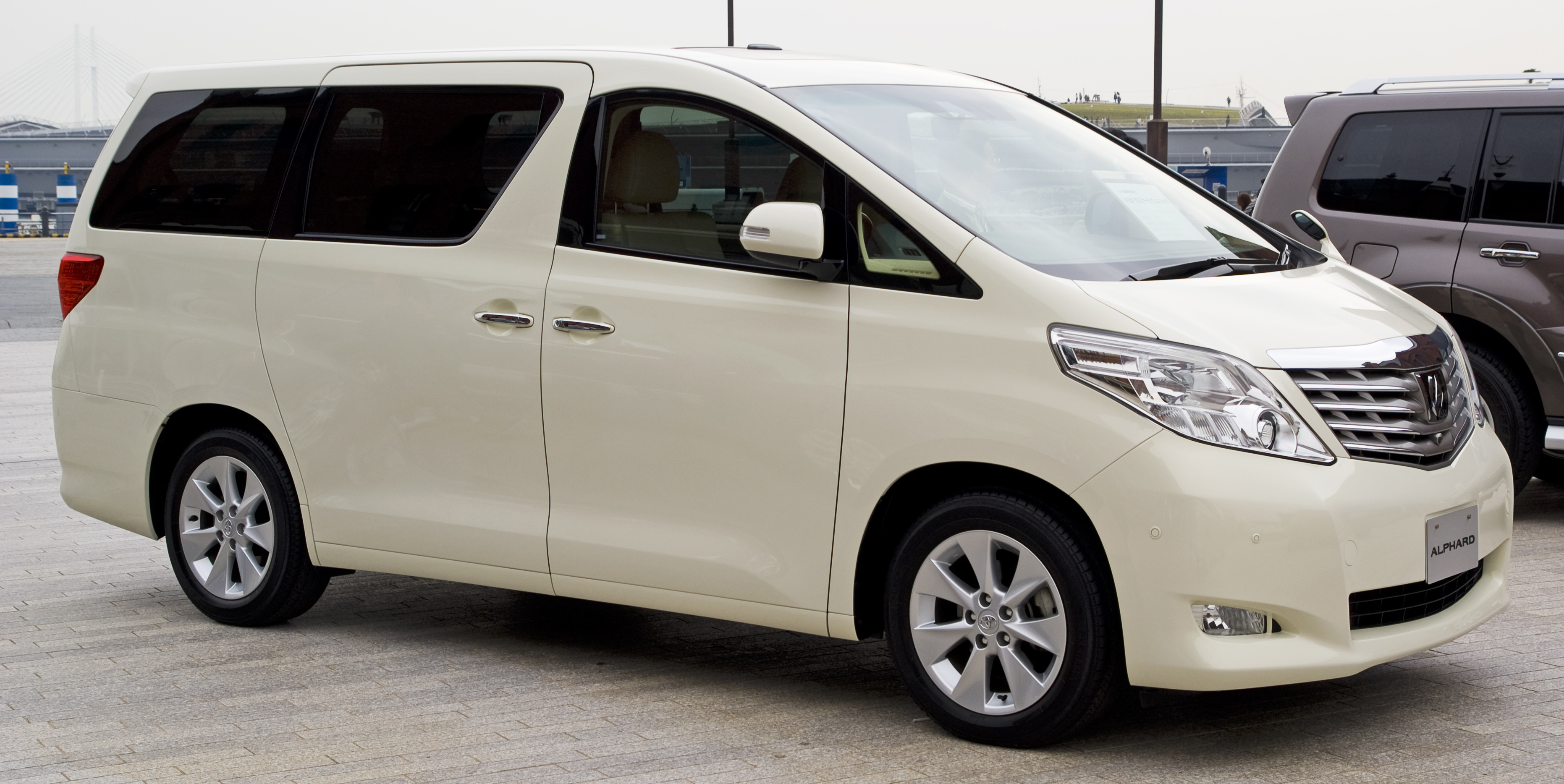
Toyota introduced the redesigned Alphard in Japan on 12 May 2008 alongside the Vellfire, giving the two related MPVs distinct exterior identities. The original Alphard range included 2.4-litre petrol and 3.5-litre V6 petrol versions; Toyota added the Alphard Hybrid to the range in November 2011. These are generation facts, not the specification of every imported car.
The 2008 launch was petrol only. Toyota’s 2011 update set Japanese hybrid sales from 21 November 2011, so a 20-series badge alone does not identify a hybrid.
Toyota’s launch table pairs the 2.4-litre 2AZ-FE petrol with Super CVT-i and the 3.5-litre 2GR-FE V6 with 6 Super ECT. The later 2.4-litre 2AZ-FXE hybrid uses THS II and E-Four. Confirm the car’s grade and chassis details before applying any of these facts.
Toyota listed seven- and eight-seat versions at launch. Verify the actual second-row layout, seat condition, access to the third row and the equipment fitted to the exact car.
Ask for the Japanese identification plate, export or auction documents and service evidence. Check the car’s condition and history separately from this model guide.
02 / MANUFACTURER REFERENCE
These figures describe the dated Japanese manufacturer releases below. Match the exact build date, grade, chassis and fitted equipment before applying them to an individual car.
The 2011 facelift and hybrid addition changed the range. Toyota also offered drivetrain and equipment choices by grade. Do not infer a specific car’s fuel, gearbox, seat count, drive layout or options from “Alphard 20” alone.
DATED JAPAN LAUNCH REFERENCE / CHECKED 20 OCTOBER 2026
Toyota’s May 2008 launch grade table lists the 240S with seven seats, a 2.4-litre petrol engine, Super CVT-i and front-wheel drive. This reference selects that version.
| Japanese grade | 240S |
|---|---|
| Engine at launch | 2AZ-FE · 2.4-litre petrol |
| Transmission | Super CVT-i · continuously variable |
| Drive | Front-wheel drive (2WD) |
| Seating | Seven seats |
| Japan introduction | 12 May 2008 |
Use the individual vehicle’s Japanese documents for its full type code, dimensions and mass. A grade name alone does not establish these details.
Keep this initial petrol version separate from eight-seat cars, 4WD, the 3.5-litre V6, later special editions and the 2011 facelift or hybrid. The reference photograph does not establish engine, drive, seats or fitted options.
Original manufacturer catalogue PW0025-0805, archive book60000926 with46labelled image pages (not a PDF). Printed43, upper2.4L/2WD table, 240S >7seats, data column3 of6; full type suffixDBA-ANH20W-PFXSK. Dimension, vehicle mass and directly printed gross mass rows in this selected column. Footnotes 1–3and5 qualify factory options and17-inch-wheel alternatives. Engine values use the separate2.4L/2AZ-FE column on printed42, with explicitly NET power and torque row headings.
03 / UK BUYER CHECKS
Use the generation as a shortlist, then verify the vehicle and its route to UK registration before committing.
Ask for: a readable Japanese chassis or identification plate, original registration or export evidence, auction or condition records where available, service history and clear photographs of the relevant grade and equipment. Compare the documents with the vehicle itself.
Plan the UK route: establish what import declaration, tax, approval or exemption, DVLA registration and insurance steps apply to the individual car. GOV.UK’s importing-vehicles guide ↗ sets out the current official process. An overseas launch fact does not establish UK compliance, cost or registration status.
Bring the year, grade, photos, documents and intended family use to a sourcing conversation. JMH can discuss an individual Alphard; this page is a model reference and does not show a car for sale.
04 / SOURCE NOTES
Manufacturer statements are tied to their publication date and market. They do not describe every later variant.
Technical reference and photograph reviewed 20 October 2026. The photograph is a real model reference, not Japan Motor Hub stock or a condition report. The launch reference table describes only the stated version. Match the individual car’s documents and fitted options.
Japan Motor Hub Ltd.
People are our greatest asset.
You might be surprised by the price — and how quickly we can make it happen.
Message us on WhatsApp
Security: We will never ask for passwords, PINs, one-time codes or full card details by phone or WhatsApp.Open WhatsApp (opens in a new tab)Your people. Your next chapter. Join the conversation, share your next car and follow the journey with Japan Motor Hub.
JDM4U — JDM research. Made clear. The research and education part of Japan Motor Hub. Contact JMH for vehicle sourcing.
© 2026 Japan Motor Hub. All rights reserved.
JAPAN MOTOR HUB LTD · Registered in England and Wales
Company number: 17466092